
Egg Weekly: Off-Season + Inventory Accumulation, How Long Will Egg Prices Keep "Enduring"?(Oct 15)
Egg Weekly: Off-Season + Inventory Accumulation, How Long Will Egg Prices Keep "Enduring"?

I. Domestic Egg Market Analysis
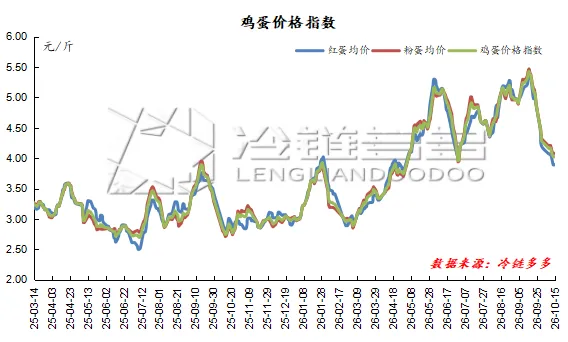
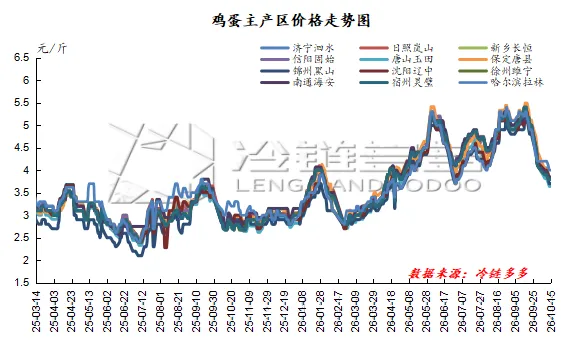
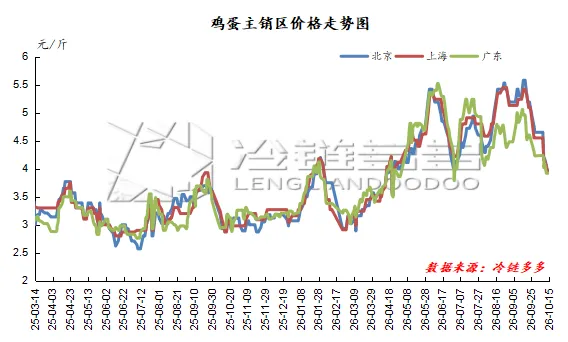
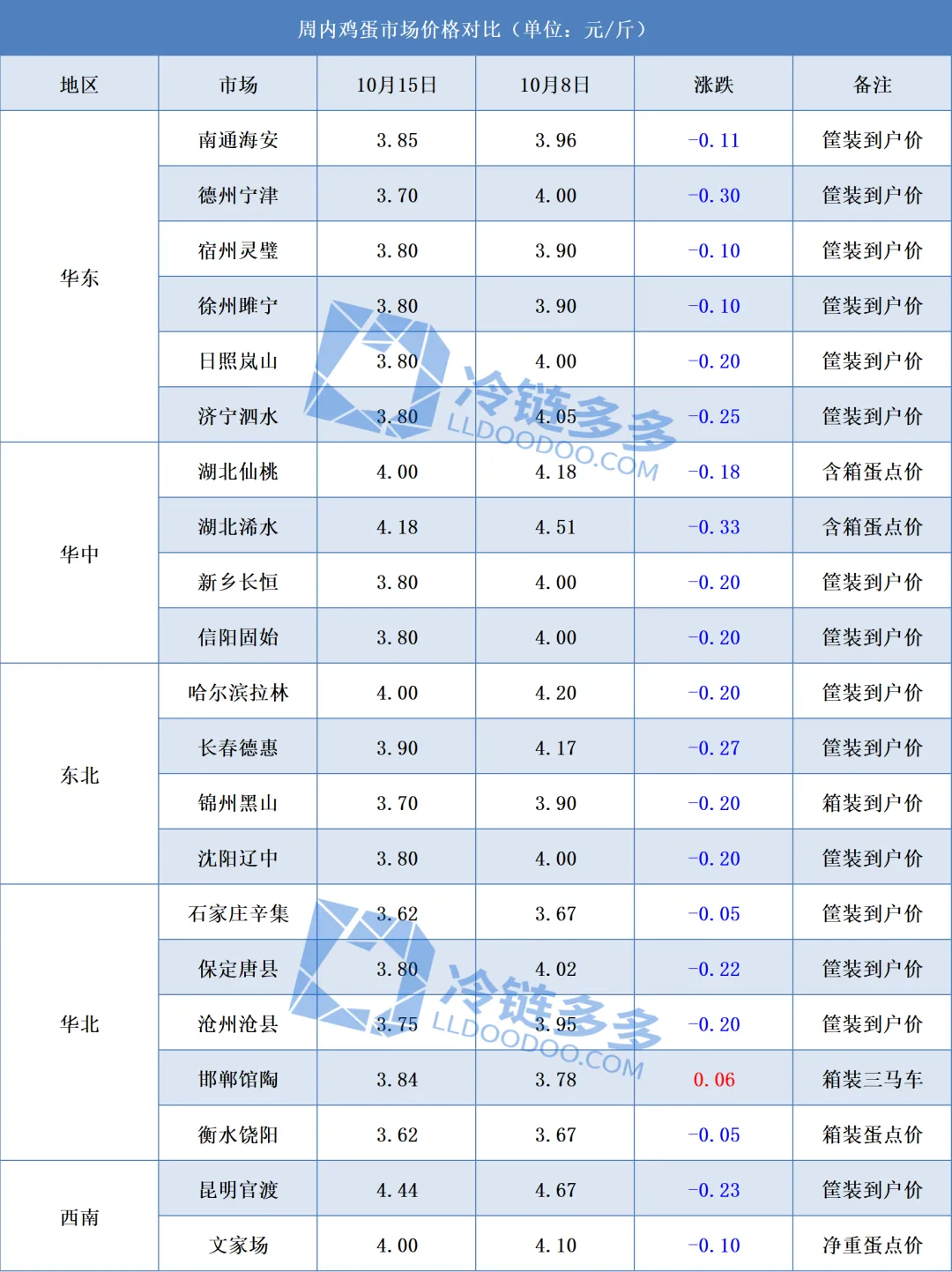
This week, domestic egg market quotes showed a significant declining trend. As of Thursday this week, the average price of red-shell eggs was 3.89 yuan/jin, down 0.18 yuan/jin from last week, and the average price of pink-shell eggs was 4.08 yuan/jin, down 0.12 yuan/jin from last week. Both red-shell and pink-shell egg prices experienced varying degrees of decline, with the price spread between the two widening to 0.19 yuan/jin. Supply-side pressure continued to manifest, with ample supply in major producing areas, widespread delayed culling of old hens by farmers, elevated inventory of large-grade eggs, and continuously accumulating production-area inventory leading to increasingly loose supply. On the demand side, support was insufficient, with the post-holiday consumption off-season continuing, limited active restocking willingness from food factories and traders, and flat end-user essential demand, resulting in overall sluggish sales.
1.2 Egg Market Price Trend Charts
II. Laying Hen Inventory and Slaughter Analysis
2.1 Inventory Analysis
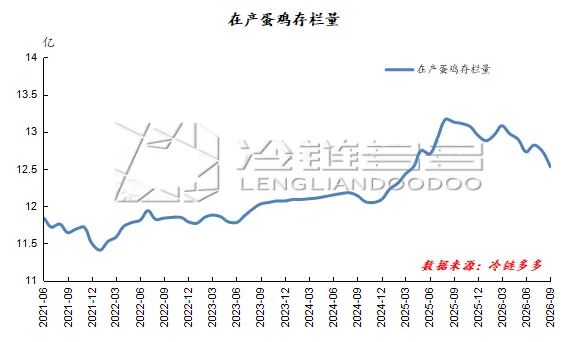
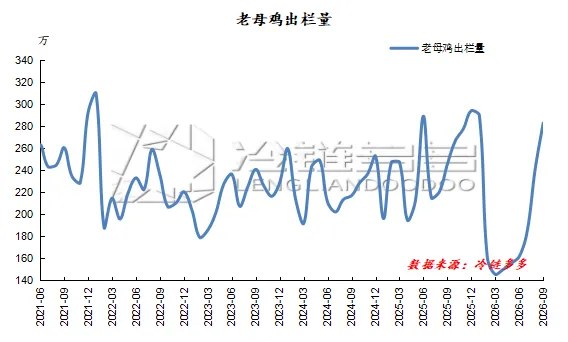
In terms of total inventory, the laying hen flock continues to maintain a relatively declining trend. Newly started laying hens in September correspond to the May spring restocking peak season chicks, with sales volume increasing month-on-month during that period. Meanwhile, farmers are bearish on the post-autumn market outlook, with culling willingness strengthening, leading to a significant increase in old hen slaughter volume. Overall, the number of newly started layers is smaller than the actual old hen slaughter volume, resulting in a month-on-month decrease in the laying hen inventory.
III. Egg Demand Analysis
On the demand side, post-holiday demand in sales areas has noticeably weakened. Food factories lack centralized stockpiling activity, and market demand is supported only by retail essential needs. Overall sales are sluggish, and inventory digestion is slow. Facing a sluggish market, distributors are proactively controlling procurement volumes, generally adopting a fast-in-fast-out model, maintaining low inventory levels to avoid the risk of overstocking.
IV. Egg Market Outlook
From the supply side, newly started production is stable, and as temperatures cool, egg weights are increasing. With egg prices declining, bearish sentiment is rising and hen culling is increasing, keeping the laying flock inventory essentially stable. Demand weakness continues, with production-area inventory accumulating and shipping pressure emerging.
From the demand side, the off-season pattern continues, with holiday dividends fading. Traders and food enterprises are purchasing based on sales, controlling inventory and reducing volumes. Only schools and institutions have a small amount of essential consumption, and demand lacks support.
Overall, the supply side shows stable new production and increasing egg weights with ample supply, while the demand side continues in an off-season with cautious restocking and sluggish sales. The supply-demand relationship is trending toward loose conditions, with production-area inventory continuing to accumulate and shipping pressure gradually emerging. Egg prices may continue to weaken, with some areas still having room for minor declines. The expected adjustment range is approximately 0.50-0.80 yuan/jin, with major producing area average prices at 3.60-3.90 yuan/jin.
-
Egg Weekly: Off-Season + Inventory Accumulation, How Long Will Egg Prices Keep "Enduring"?(Oct 15)9536
-
Вьетнамнан экспортталған асшаяндардан Vibrio vulnificus табылды (15 қазан).6684
-
Польшада экспортталған мұздатылған тауық еті сальмонелламен табылды (15 қазан).7878
-
Жұмыртқа: Ұсыныс пен сұраныс азайып, жұмыртқа бағасына қатты қысым жасалуда.7432
-
Жұмыртқа: әртүрлі аймақтарда бағалар әртүрлі (13 қазан)9761